
Products
Lifts with and without a machine room
In choosing how a lift is built, what matters most is the kind of building, how it will be used and how demanding the transport is.
With a machine room
In a machine-room lift the drive and control equipment sits in a separate machine room. In practice this arrangement is most often used on refurbishments, reconstructions and modernisations of existing lifts, where the machine room is already there.
It also suits more demanding buildings with heavier traffic, such as hospitals and larger commercial and public buildings.
Advantages of a machine room:
- suited to demanding and heavily used buildings,
- good access to the drive and control equipment,
- very well suited to refurbishing and modernising existing lifts,
- allows the lift to be fitted to the existing design of the building.
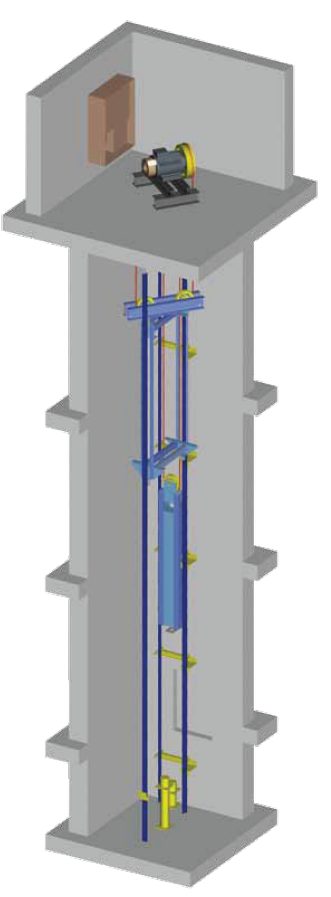
Machine-room-less
In a machine-room-less lift the drive equipment sits inside the shaft, so no separate machine room is needed. This arrangement is now the most common on new residential buildings and less demanding commercial ones.
On more demanding buildings, such as hospitals and buildings with very heavy traffic, the arrangement is decided on the specific technical and transport requirements.
Advantages of machine-room-less:
- no separate machine room needed,
- more efficient use of space,
- easier to work into the architecture of the building,
- suits most residential and less demanding commercial buildings,
- modern, energy-efficient drive systems.
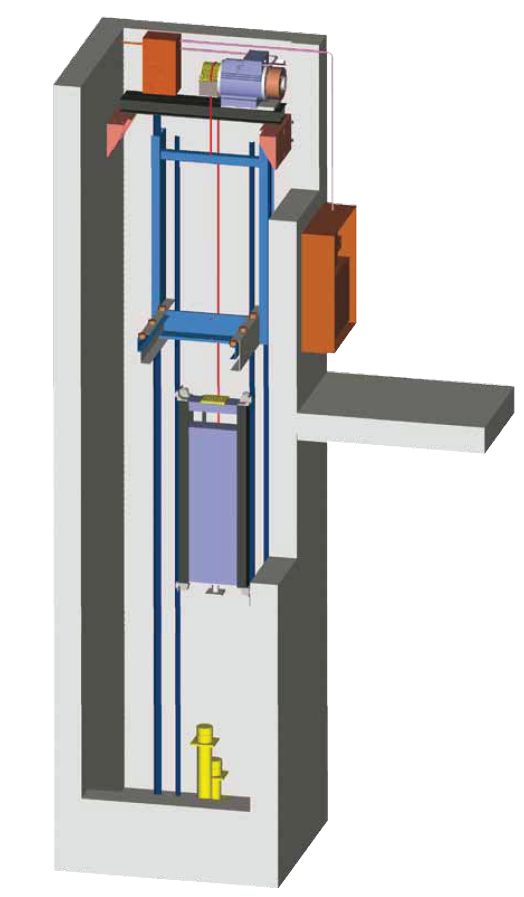
The right answer for each building
At DVG INŽENIRING we weigh what the building is for, how heavily it will be used, the load, the speed, the space available, and what servicing and maintenance will ask of it.
From that we settle on the best arrangement for the lift: technically sound, dependable and economic over its life.